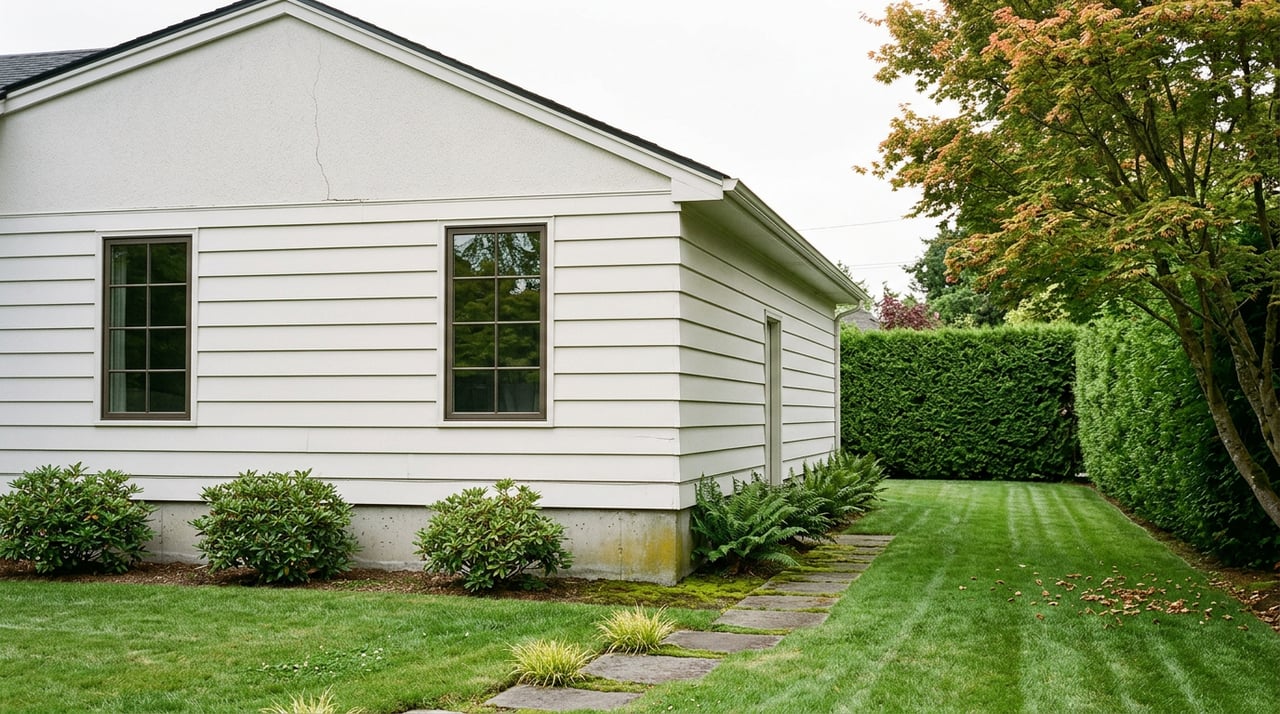
Two nearly identical brick ramblers sit on quarter-acre lots twelve minutes apart, one just inside Bellevue's city limits, one just inside Mercer Island's. Same lot size, same 1962 build year, same three bedrooms. On paper, both just became more valuable under the same 2023 state law. In practice, one of those lots can legally hold six homes today. The other can hold two.
That gap is not a rumor or a rounding error. It comes from how Washington's middle housing and accessory dwelling unit laws were written to scale by city size, and from how unevenly King County's own cities have gotten around to implementing them. If you're comparing properties across Bellevue, Mercer Island, Kirkland, Issaquah, Seattle, or unincorporated King County right now, the state law you've read about is not doing the same thing to every lot on your list.
One Law, Three Different Numbers
House Bill 1110, the state's middle housing law, sets minimum unit counts by city population, not a flat statewide number. Bellevue's own planning department explains it plainly: state law requires cities like Bellevue to change local comprehensive plans and development codes to allow up to four housing units per lot, six per lot within one-quarter mile walk of a major transit stop or when two units are affordable. That's the requirement for larger cities. Mercer Island falls into a smaller population band, and its own planning materials spell out a different floor: Mercer Island is categorized as a city with populations of at least 25,000 but less than 75,000, required to allow at least two middle housing units per lot.
The practical effect on Mercer Island is specific enough to put a number on. Roughly 7,500 residentially zoned lots on the island are subject to the middle housing density requirements, and nearly 100 of those lots sit within a quarter mile of the light rail station, where four units per lot are permitted outright. Everywhere else on the island, the floor is two.
| City | Minimum units per lot | Units near transit or with an affordable unit | Where local rules stand |
|---|---|---|---|
| Seattle | 4 | 6 | Permanent zoning in effect |
| Bellevue | 4 | 6 | Implementing ordinances adopted |
| Mercer Island | 2 | 4 | Interim rules in place, permanent rules still being drafted |
Same statute. Three different real answers, and that's before anyone accounts for lot-specific constraints like critical areas or covenants that can shrink the number further.
The Calendar Matters as Much as the Code
Population band explains part of the gap. Timing explains the rest. Seattle's permanent zoning took effect January 21, 2026, with every Neighborhood Residential lot now allowing at least four units and lots within a quarter mile of a major transit stop allowing up to six. Bellevue moved on an earlier clock: on June 24, 2025, the Bellevue City Council adopted ordinances to implement the requirements of House Bills 1110 and 1337, updating the Land Use Code and City Code to expand the number and type of housing units permitted in residential areas.
Mercer Island is still mid-process. In February and March 2025, the city council enacted interim development regulations to comply with the state legislative requirements, adopted quickly to meet state-mandated deadlines, with permanent regulations to follow additional public outreach and analysis beginning in 2026. That means a Mercer Island lot's real capacity today rests on rules the city itself describes as temporary.
Zoom out and the picture gets messier, not cleaner. A survey the Puget Sound Regional Council released in April 2026 found that only 84 percent of Washington jurisdictions had implemented middle housing rules under HB 1110 by that point, meaning roughly one in six had not. And the compliance calendar keeps moving: the periodic update due date has been extended to December 31, 2026, for jurisdictions with updates due June 30, 2026, so parts of King County outside the cities covered here are still ahead of their own deadline, not behind it.
Zoning Capacity Is a Ceiling, Not a Promise
None of this means every unlocked lot turns into a fourplex by fall. House Bill 1337 layered on top of HB 1110 to guarantee accessory dwelling units specifically. HB 1337 requires fully planning cities and counties to allow two ADUs on all residential lots that allow single family homes within an urban growth area, with some limitations. No owner-occupancy requirement, no cap on ambition. But the limitations are where the real work happens.
Lots near water carry their own friction. Shoreline Management Act review can add four to eight weeks and five to fifteen thousand dollars to an ADU project within 200 feet of a lake or Puget Sound, a detail that matters across a county with as much lakefront as King County has, from Mercer Island's shoreline to Kirkland's waterfront to Bellevue's lake-adjacent neighborhoods. Financing adds another layer. The national average 30-year mortgage rate was still sitting in the mid-6 percent range as of early July 2026, and a fourplex that pencils at a lower borrowing cost can turn marginal once construction interest and permanent debt get recalculated.
The zoning number on a listing sheet tells you what's legally possible. It doesn't tell you what's financeable, what a lender will underwrite, or what a builder can deliver at a price the neighborhood supports.
Does an ADU Actually Pay for the Tax Increase?
Here's where the math gets more forgiving than it sounds. Adding an ADU does raise your assessed value, and your tax bill follows. But run the numbers against rental income and the increase is modest. Using 2026 West Seattle rental figures as an example, a one-bedroom detached ADU renting near $2,000 a month typically adds something like $2,200 a year in additional property tax, roughly $183 a month. That's close to one month's rent given up to taxes each year, not a bill that erases the upside.
It's also worth knowing the lag built into King County's own assessment cycle. The county defines market value as what a willing buyer would pay to a willing seller, and for taxes paid this year, values most properties as of January 1 of last year. So a newly permitted ADU won't show up in your tax bill the moment it's framed. It shows up once it's built, inspected, and captured in the next annual valuation cycle, which can trail construction by a year or more.
The Newest Wrinkle: Rural King County Gets Its Own Rule
Most of the middle housing conversation centers on cities, but King County is also home to unincorporated land outside any urban growth area, and that land just got its own separate change. Effective June 11, 2026, House Bill 1345 lets certain Washington counties allow detached ADUs outside urban growth areas, if the ADUs and county meet specific requirements. That's a law not yet two months old as of this writing, and it applies specifically to the rural stretches of the county that HB 1110 and HB 1337 were never written to reach. If you're evaluating acreage outside the Eastside's incorporated cities, this is the rule to ask about, not the headline law everyone already knows.
What This Means If You're Comparing Properties Right Now
None of this is happening against a frantic market. Inventory across the Northwest MLS service area climbed to 23,088 active listings by the end of June 2026, up 16.4 percent from a year earlier, while King County's median sales price in June 2026 held at $889,000, second highest among the region's counties. Buyers have room to be selective. That's exactly why the zoning gap matters more, not less. In a calmer market, the properties that stand out are the ones carrying real, usable capacity that a comparable listing across a city line does not.
Before you treat a lot's zoning as settled, check three things: whether the city's rules are permanent or still interim, what population band the city falls into under HB 1110, and whether the specific parcel sits near transit, water, or a covenant that changes the real number. A portal listing won't tell you any of that. A conversation with someone who tracks each city's ordinance calendar will.
A Few Direct Questions
Does my city's new zoning automatically raise my home's assessed value? Not automatically. Assessed value follows the county's annual reassessment cycle and reflects built improvements, not theoretical zoning capacity. A lot's legal ceiling and its current assessed value are two different numbers until something gets built.
If my city hasn't adopted permanent rules yet, can I still build under the interim ones? Generally yes, interim regulations are legally enforceable while permanent ones are drafted, but they can change. Confirm current status directly with your city's planning department before committing to a design.
Does this apply the same way to a property outside city limits? No. Unincorporated King County outside an urban growth area follows a different framework, most recently expanded by HB 1345 for detached ADUs as of June 2026. Urban growth area boundaries, not just county lines, determine which rules apply.
If you're weighing a purchase or a listing anywhere between Seattle and the Eastside and want to know what a specific lot's zoning actually allows today, not what the headline law suggests, The Sessoms Group tracks these ordinances city by city as part of our builder advisory work. Schedule your concierge consultation and we'll walk the real numbers with you before you make an offer.