If you have ever wondered why two Bellevue estate homes with similar square footage can sell at very different prices, the answer often starts outside the walls. In Bellevue, the lot, the view, and the privacy a property delivers can shape value just as much as the house itself. When you understand how these site features work, you can make smarter decisions whether you are buying, selling, or planning improvements. Let’s dive in.
Why site features matter in Bellevue
Bellevue is not just another suburban housing market. The city spans more than 33 square miles between Lake Washington and Lake Sammamish, supports about 160,000 jobs, includes nearly 100 parks, and describes itself as a city in a park. It also has more than 80 miles of streams and 800 acres of wetlands, which means many of its most sought-after residential settings combine land, water, and tree canopy in ways that are hard to duplicate.
That scarcity matters. Research on home values shows that lot size is a standard part of single-family pricing, but its impact changes by location and usually becomes more nuanced once home size is taken into account. In a constrained market like the Seattle area, the value often comes from the utility and rarity of the land itself, not only from the structure sitting on it.
Lot size versus usable land
A bigger lot does not automatically mean a more valuable estate. In Bellevue, what matters most is how much of that site you can actually use in daily life. That includes room for outdoor living, distance from neighboring homes, and a buildable footprint that works well with the shape and slope of the parcel.
Bellevue zoning rules make this especially important. Setbacks vary by district and can also change depending on whether a lot fronts a street, access easement, or private road. In the single-family districts shown in Bellevue’s dimensional chart, maximum lot coverage by structures is generally 35% to 40%, and additional rules can apply in shoreline or critical-area settings.
That means two properties with similar recorded lot sizes may feel very different on the ground. One parcel may offer a wide, practical backyard and a clean building envelope, while another may lose usable space to setbacks, slope, or environmentally sensitive areas. For estate buyers and sellers, the real value question is not just how many square feet are on paper, but how much of the land supports the lifestyle the property is supposed to deliver.
What can reduce lot utility
Several site conditions can limit how much value a lot contributes:
- Narrow or irregular parcel shape
- Steep topography
- Corner-lot or access-road setback requirements
- Critical areas or shoreline overlay restrictions
- Limited room for patios, terraces, or lawn space
These factors do not make a property undesirable. They simply mean the market may value the lot differently than a similarly sized parcel with fewer constraints.
Why views command a premium
In Bellevue, views are a real pricing driver because the city sits between two lakes and includes homes with water, bay, and skyline outlooks. Bellevue’s planning framework also treats view corridors as something worth preserving, which reinforces that views are more than a marketing phrase. They are part of the property’s long-term appeal.
Still, not every view carries the same value. Research from a long-term Washington housing study found that water-view premiums vary based on market conditions, distance, and scope. In practical terms, a broad, protected lake or skyline view usually has a different value profile than a partial glimpse between rooftops.
What makes a Bellevue view more valuable
When you evaluate a view, focus on these questions:
- Type: Is it lake, bay, skyline, or territorial?
- Scope: Is the view wide and dramatic or narrow and limited?
- Durability: Could future development or landscaping affect it?
- Positioning: Is the view visible from primary living spaces and outdoor areas?
A durable view often matters more than a flashy one that could disappear. Buyers tend to pay more when the geography feels hard to replace and the outlook appears likely to last.
Privacy often comes from the land itself
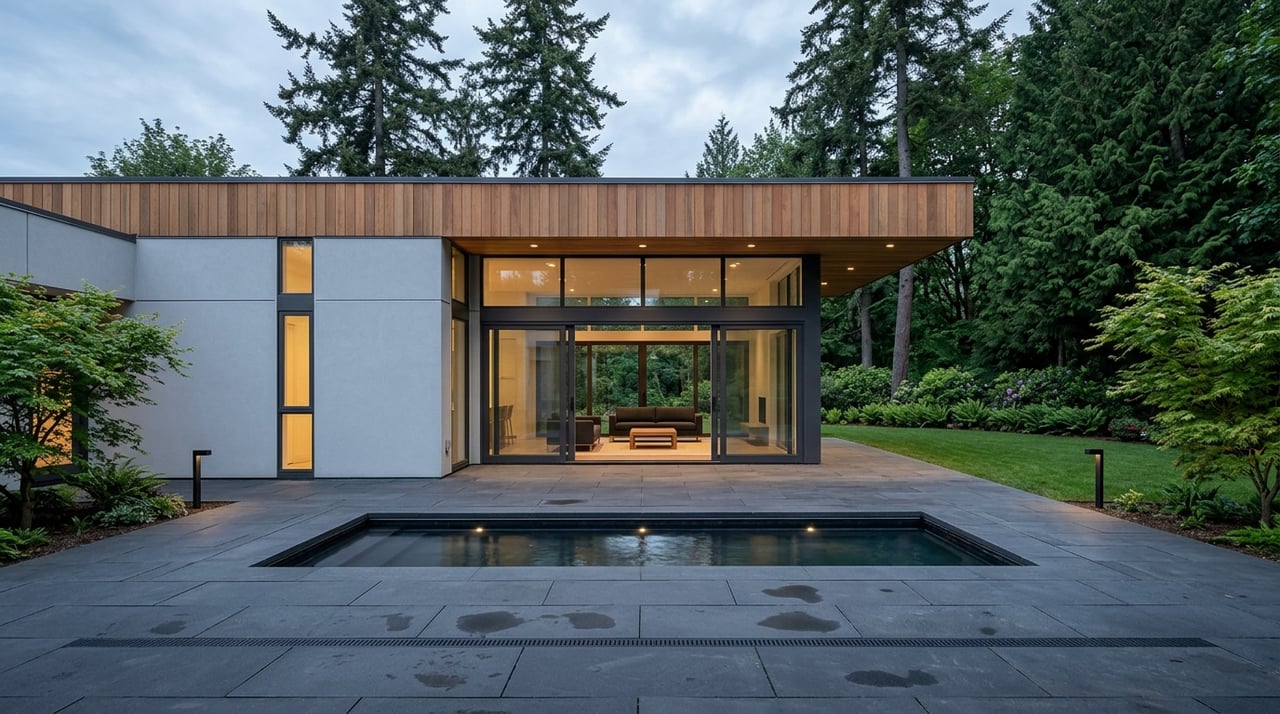
Privacy is one of the most underestimated drivers of estate value. In Bellevue, privacy usually comes from mature trees, topography, setbacks, and the way the home sits on the lot. Those features can soften street exposure, reduce sightlines from neighbors, and create a more secluded day-to-day experience.
Bellevue’s own tree guidance supports that idea. The city states that trees enhance visual character, promote transitions between land uses, and help protect property values. Its 2023 canopy assessment found 39.3% canopy citywide, and suburban residential areas account for 64% of the city’s tree canopy, showing how much of Bellevue’s privacy value exists on residential lots.
This matters because mature screening is not easy to recreate. Bellevue updated tree-preservation rules in 2024, and permits may be required to remove significant and landmark trees, including trees in critical areas, structure setbacks, and vegetation-conservation areas near shorelines. A mature buffer that has taken years to establish can be a meaningful asset because replacing it may be slow, expensive, or restricted.
Privacy features buyers notice
In Bellevue estate properties, privacy often shows up in ways that feel immediate when you walk the site:
- Mature perimeter trees
- Grade changes that separate the home from the street
- Deeper setbacks from neighboring structures
- Outdoor spaces tucked away from direct view
- Landscaping that creates screening without closing off light
These features can make a home feel calmer and more exclusive, which is part of why the market often rewards them.
How buyers should evaluate estate value
If you are buying in Bellevue, it helps to look past surface finishes and ask whether the land itself supports long-term value. A renovated kitchen can be changed later. A protected view, useful outdoor space, and established privacy are much harder to manufacture.
A practical framework is to evaluate each property using four questions:
- How much of the lot is truly usable after setbacks and site constraints?
- How protected is the view from future change?
- How much privacy comes from existing trees and topography?
- How easy would it be to recreate these features if they were missing?
King County parcel data can help you start with lot area and appraised value, while Bellevue’s setback, shoreline, critical-area, and tree rules help explain why similar-looking parcels may perform differently in the market. This kind of analysis can help you separate temporary polish from lasting scarcity.
How sellers can position these features
If you are selling a Bellevue estate, your strongest story may be about what cannot easily be replaced. Buyers in this segment often respond to permanence. They want to understand why a property’s setting is special today and why it is likely to remain special over time.
That means your marketing should highlight usable outdoor areas, mature screening, and the quality and durability of the view. It should also explain the experience of the lot itself, not just the finishes inside the house. In a market where land utility plays a major role, strong presentation and clear positioning can help buyers recognize the full value of the property.
For luxury sellers, this is where a detailed, high-touch strategy matters. Professional photography, video, and thoughtful storytelling can show how privacy, sightlines, and outdoor living come together in a way buyers can immediately understand.
Why Bellevue estate pricing can diverge fast
In many markets, buyers can compare homes mainly by size, condition, and location. In Bellevue, estate pricing often becomes more layered because the site itself can carry so much of the premium. Two similar homes may diverge sharply in value once the market starts pricing usable land, protected views, and privacy that took decades to create.
That is why estate analysis in Bellevue needs to go beyond the basics. You are not only comparing bedroom count or finishes. You are comparing scarcity, durability, and the lived experience of the lot.
If you want help evaluating a Bellevue estate purchase or positioning a luxury property for sale, The Sessoms Group brings a boutique, concierge-level approach backed by deep Eastside expertise, premium marketing, and careful guidance from start to finish.
FAQs
How does lot size affect Bellevue estate value?
- Lot size affects value most when it creates usable outdoor space, a strong buildable footprint, and separation from neighboring homes. In Bellevue, setbacks, slope, and critical-area rules can make two similar-size lots perform very differently.
Do views always add value to a Bellevue home?
- No. A view’s value depends on its type, width, distance, and how likely it is to remain protected over time. Broad water or skyline views with stronger durability usually command more attention than limited or easily blocked views.
Why is privacy so important in Bellevue estates?
- Privacy often comes from mature trees, terrain, and setbacks that are difficult to recreate quickly. Because Bellevue regulates many tree removals and mature canopy takes years to replace, existing privacy features can be a meaningful long-term asset.
What should buyers check before purchasing a Bellevue estate lot?
- Buyers should review how much of the lot is usable after setbacks and other site constraints, whether the view may change, and how much privacy comes from existing trees and topography. Parcel data and local zoning rules can help answer those questions.
How should sellers market lot, view, and privacy in Bellevue?
- Sellers should focus on permanence and lifestyle. That includes showing usable outdoor areas, explaining view quality and durability, and highlighting mature screening or site features that make the property feel private and hard to replicate.